

The Ultimate Guide to Aging in Place With a Home Elevator
Table of Contents
- Key Takeaways
- Why Aging in Place Requires a Future-Proof Home Design
- Is Your Home Future Proof: The ultimate Guide To Aging In Place With a Home Elevator
- Stairs vs. Elevators: Choosing the Right Mobility Solution
- Residential Home Elevators 101: Types, Space, and Design
- Place Matters: Designing a Future-Proof Home Around Your Elevator
- Safety Features and Codes: What Makes a Home Elevator Truly Secure
- Planning, Permits, and Timeline: What to Expect From Initial Consultation To Installation Process
- Costs, Financing, and Long-Term Value
- Other Key Aging in Place Upgrades to Pair With a Home Elevator
- Working With the Right Professionals
- Bringing It All Together: Your Future-Proof Home Roadmap
- FAQ: Home Elevators and Aging in Place
- Q: At what age should I start planning a home elevator if I want to age in place?
- Q: Can my existing two-story home be retrofitted with a residential elevator?
- Q: How noisy is a home elevator in daily use?
- Q: What happens if the power goes out while someone is in the elevator?
- Q: Will installing a home elevator hurt or help my home’s resale value?
Key Takeaways
Making your home work for you over the next 10, 20, or 30 years requires thinking ahead—not waiting until stairs become impossible. Here’s what you need to know about creating a home that supports independence at every stage of life:
- Planning for residential elevators during design or major renovation is far more cost-effective than retrofitting after a health crisis, making it the smartest aging in place solution for any multi-level home
- Home accessibility lifts have safety features that dramatically reduce fall risk on stairs—the number one structural barrier to staying in your own home—and support elderly mobility solutions that keep you independent longer
- True future proof design combines a home elevator with other upgrades like barrier-free entries, accessible bathrooms, and improved lighting rather than relying on a single modification
- Budget, permits, and elevator selection should be mapped out as a phased project that anticipates your specific needs 10 to 20 years into the future
- The upfront investment in a home elevator often costs less over time than assisted living and can increase property value for multi-generational buyers
Why Aging in Place Requires a Future-Proof Home Design
The demographics are clear: the population of adults aged 65 and older is growing faster than any other age group in the United States. By 2030, all baby boomers will be older than 65, and the demand for housing that supports aging in place and that address mobility issues is surging alongside this shift.
Here’s what the research consistently shows: nearly 90% of adults over 65 want to remain in their homes as they age rather than move to assisted living or a nursing facility. This preference isn’t just emotional—it’s practical. People know their neighborhoods, their routines, and their community connections. Moving disrupts all of that.
But staying home in a multi level home with stairs requires careful planning. Consider the financial comparison:
| Living Arrangement | Approximate Monthly Cost | Annual Cost |
|---|---|---|
| Assisted Living Facility | $4,000 – $6,000+ | $48,000 – $72,000+ |
| Home with Elevator + Modifications | One-time investment | Spreads over decades |
| In-Home Care (part-time) | $1,500 – $3,000 | $18,000 – $36,000 |
A residential home lift and supporting home modifications typically represent a one-time capital investment that pays for itself within a few years compared to facility costs—while letting you stay in the house you love and have built your life around. Many homeowners report that they should have installed a residential elevator sooner after experiencing its benefits.
Future proof design protects more than your finances. It allows you to maintain independence, your daily life rhythms, and the connections to family members and neighbors that matter most. The key insight is this: even if you’re currently active and healthy, this mindset means planning now for the reduced mobility, vision changes, and balance challenges that affect most of us eventually.
Is Your Home Future Proof: The ultimate Guide To Aging In Place With a Home Elevator
Before you call an elevator installer or architect, grab a notebook and walk through your house floor by floor. This practical home safety audit is the foundation of any effective aging in place plan, especially if you are considering a residential elevator.
Your Room-by-Room Checklist
Start at your main entry and work through every level, asking these questions:
Entries and Exits
- Are there steps at the main entrance? How many?
- Could a ramp or zero-step entry be added?
- Are doors wide enough for a walker or wheelchair (ideally 36 inches)?
Stairs
- How many staircases connect your floors?
- Are handrails sturdy and on both sides?
- Is there adequate lighting at the top and bottom?
- Could you safely carry laundry or heavy items up and down?
Bedrooms
- Is your primary bedroom on the first floor, or would you need access to upper levels?
- Are closets and storage accessible without reaching or climbing?
Bathrooms
- Do you have a full bathroom on the same floor as your bedroom?
- Could you add grab bars, a walk-in shower, or a comfort-height toilet?
- Is there room for someone to assist you if needed?
Kitchen and Laundry
- Can you reach frequently used items without step stools?
- Is the laundry room on a floor you can easily access?
Garage and Outdoor Spaces
- Are there steps between the garage and main living areas?
- Could you navigate outdoor paths with a mobility aid?
Look Beyond Today
As you assess your space, think about practical mobility aids you might use in the future—canes, walkers, wheelchairs, or scooters. Map how these would move through your current layout. Where are the pinch points? Which doors are too narrow? Which routes would be impossible? With new builds, there is more flexibility with where a traditional elevator could be installed. For remodel projects, finding the right place matters to ensure your residential elevator is the perfect solution.
Consider involving a Certified Aging in Place Specialist (CAPS), occupational therapist, or aging-in-place consultant. These professionals identify hidden hazards—poor lighting in stairwells, certain areas with tripping risks, or layouts that make caregiving difficult.
This assessment will clarify whether a home elevator, stairlift, or single-level living reconfiguration is the most realistic solution for your situation. For most multi-story homes, the answer points toward an elevator as the central accessibility upgrade.

Stairs vs. Elevators: Choosing the Right Mobility Solution
Stairs are the number one structural barrier to aging in place in any home with multiple floors. The CDC reports that about one in four U.S. adults aged 65 and older falls each year, and stairs are a common location for serious injuries.
When many older adults think about mobility solutions, they often first think of a stairlift over a residential elevator. But understanding the differences between stairlifts and residential elevators helps you make the right modification choice for the long term.
Stairlifts: A Quick Comparison
Advantages:
- Lower initial cost (typically $3,000 – $10,000 installed)
- Faster installation process with minimal construction
- Works well for ambulatory users with some stair-climbing difficulty
Limitations:
- Requires transferring from a wheelchair or walker to the lift seat at each floor
- Cannot transport the wheelchair itself
- Difficult or impossible for users who cannot safely transfer
- Limited to one person at a time
- Carrying groceries, laundry, or heavy items remains a problem
- Often abandoned as mobility declines further
- Not aesthetically appealing for future resale value
Home Elevators: The Future-Proof Choice
Advantages:
- Eliminates stair climbing entirely—no transfers required
- Models can accommodate wheelchairs, scooters, walkers, and caregivers
- Safely transports laundry, groceries, luggage, heavy items and medical equipment
- Independence for the whole family, not just the person with mobility issues
- Lifts designed to last 20+ years with proper maintenance
- Increases accessibility & safety for guests and family members
Limitations:
- Higher upfront cost ($40,000 – $100,000+ depending on type and finishes)
- Requires more planning and installation time
- Needs regular maintenance and occasional repairs
- May not be able to be installed in certain areas of the home
For homeowners planning to stay in their home longer than 10 years, or anyone with multiple floors, a home elevator represents a practical and convenient solution for accessibility. It solves the stair problem completely rather than partially—and continues working as your needs change over time. For homes with limited space, that are space-saving home lifts can can be installed with convenience.
Residential Home Elevators 101: Types, Space, and Design
Understanding your options is essential before the initial consultation with an elevator company. Modern residential elevators come in several technologies, each suited to different homes and budgets.
Common Elevator Types
Hydraulic Elevators
- How they work: A pump pushes hydraulic fluid to raise a piston that lifts the cab
- Best for: Homes where smooth, quiet operation and strong lifting capacity matter; good for wheelchair users
- Space requirements: Usually needs a pit at the bottom and room for hydraulic equipment (though modern compact systems reduce this)
- Cost range: Mid to higher end
Traction (Cable-Driven) Elevators
- How they work: Steel cables or belts move over a sheave with a counterweight system
- Best for: Homes with more than two or three stops; energy-efficient operation
- Space requirements: Needs overhead headroom; machine room less (MRL) designs save space
- Cost range: Mid to higher end
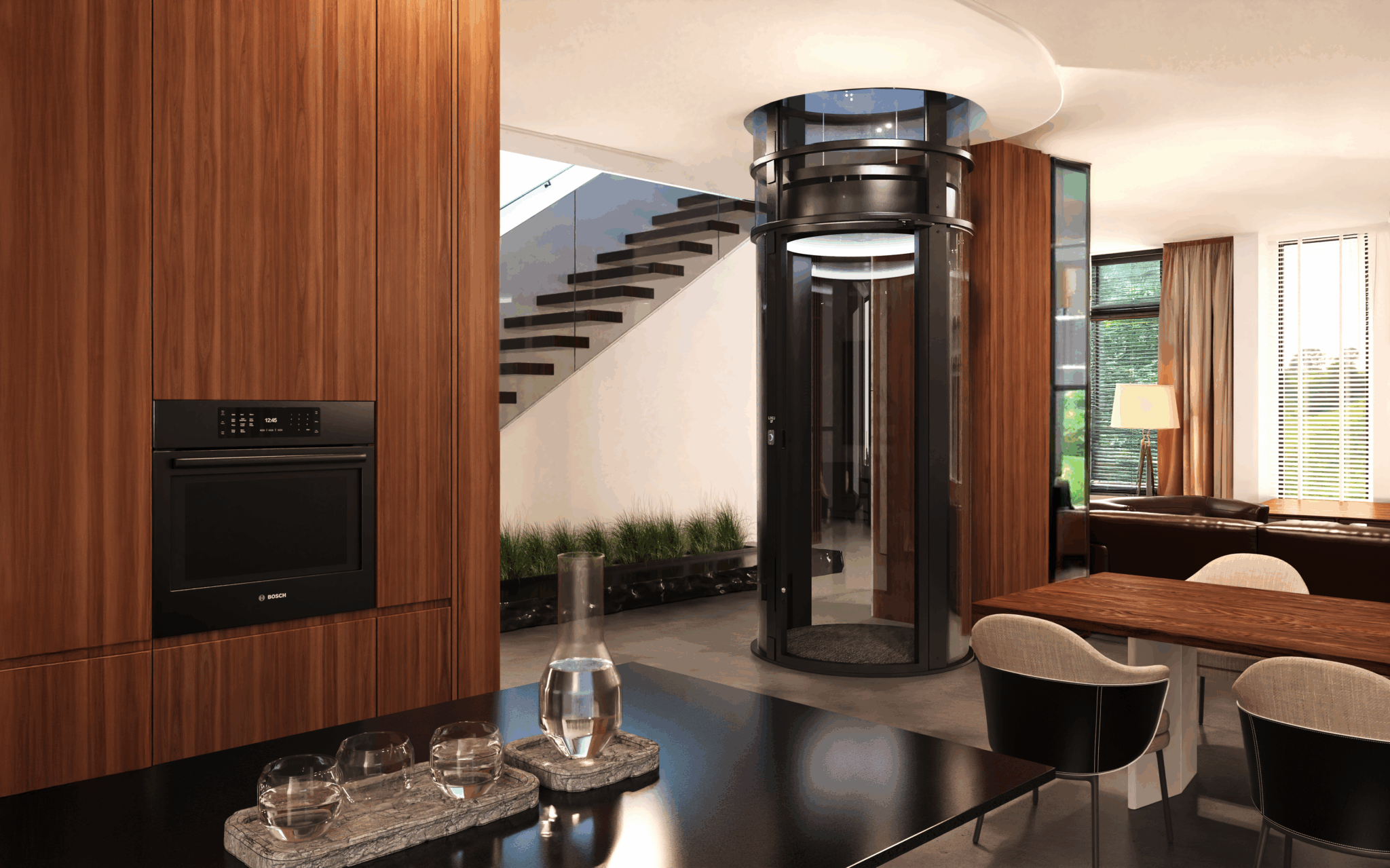
Pneumatic (Vacuum) Elevators
- How they work: Air pressure moves the cab up and down inside a self-supporting tube
- Best for: Retrofits where limited space or structural constraints exist; visually striking in open floor plans
- Space requirements: Minimal—no traditional pit or machine room needed
- Limitations: Smaller cab size; may not fit larger power wheelchairs
- Cost range: Mid-range
Vertical Platform Lifts
- How they work: Open platform moves vertically a short distance
- Best for: Overcoming a few steps at an entry or between split levels
- Limitations: Limited travel height; more utilitarian appearance; less safety features
- Cost range: $5,000 – $15,000
Maintaining Independence: Space Requirements
Depending on the elevator brand and model chosen, a residential elevator cab that accommodates a wheelchair and caregiver measures approximately 36 by 48 inches, though sizes vary. The shaft footprint—including walls and doors—adds several inches on each side.
For retrofitting a residential elevator, look at potential locations where spaces can be repurposed:
- Stacked closets that align vertically on each floor
- The area beside or beneath an existing staircase
- Corner spaces that can be converted to a shaft
- External additions with interior landings
In a new build, planning elevator space from the start costs far less money than cutting through floors later. Some builders following a comprehensive guide where they’ve created “elevator-ready” stacked closets that function as storage until the residential elevator is installed.
Home Lifts: Style and Finishes
Today’s home elevator options are highly customizable. Some brands allow you to match cabin walls, lighting, doors, and control panels to your home’s design—wood veneers, glass panels, metal finishes, or custom colors. The goal is an elevator that feels intentionally designed into your home, not bolted on as an afterthought. Once installed, not only does it assist with mobility issues and safety but lifts often increase the property value of the residence.
Place Matters: Designing a Future-Proof Home Around Your Elevator
A home elevator works best as part of a broader future proof approach to your home’s design—not as a standalone gadget dropped into a random corner. Careful planning ensures the elevator serves you well for decades.
Strategic Elevator Placement For Future Needs
Position your elevator to link the key zones you’ll need as you age:
- Main bedroom – Direct access from sleeping areas eliminates nighttime stair navigation
- Accessible bathroom – Ideally on the same floor as the bedroom, reachable from the elevator landing
- Kitchen and living areas – Where you spend most of your daily life
- Laundry – Avoid carrying baskets up and down stairs
- Garage or main entry – Coming home with groceries or returning from medical appointments
The residential elevator becomes the “spine” of your accessible home, connecting these critical spaces without stairs.
Barrier-Free Entries
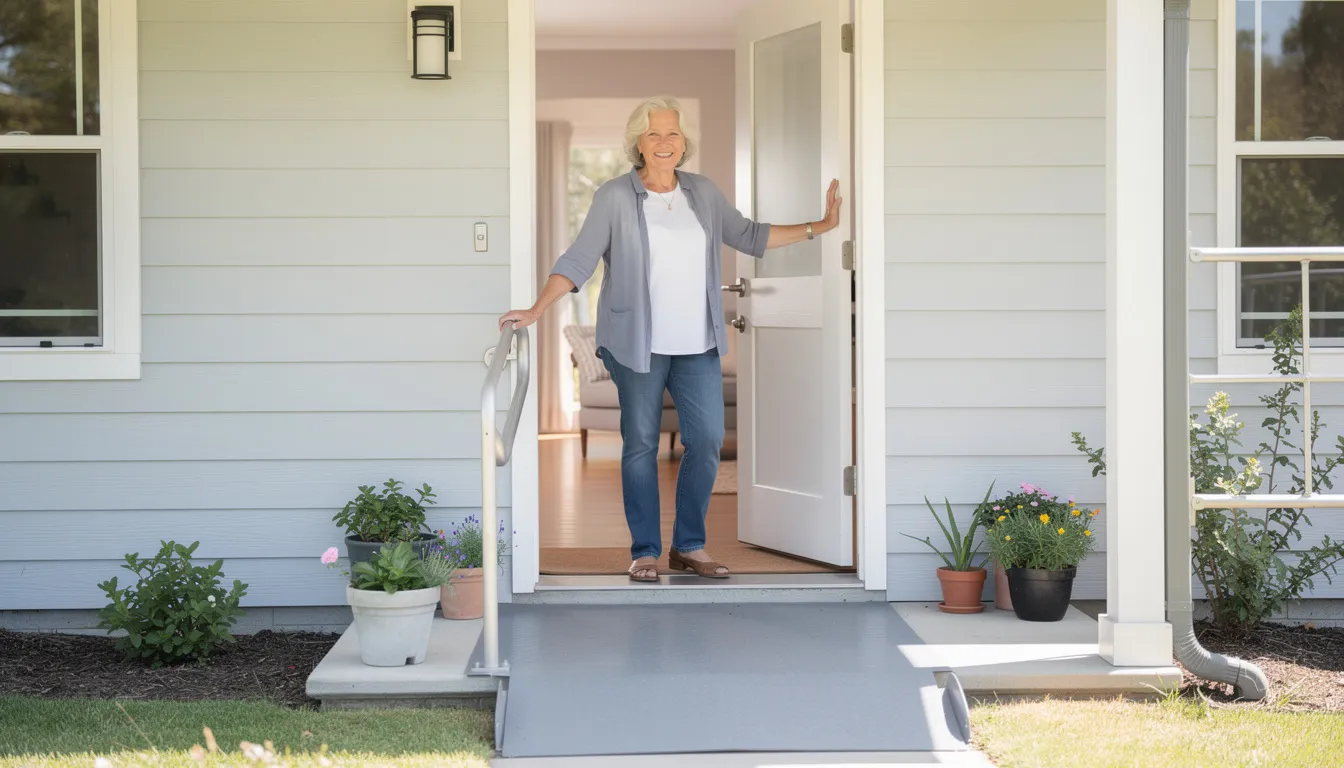
Combine the elevator with no-step entries—either at the main door or through the garage. A home remains accessible only if you can get inside without navigating steps. Consider:
- Zero-threshold entries with proper drainage
- Ramps with gradual slopes (1:12 ratio recommended)
- Wider exterior doors (minimum 36 inches)
- Covered entries for weather protection
Interior Circulation
Beyond the elevator, your floors should support easy movement:
- Widen interior doors to at least 32 inches (36 inches is better)
- Smooth out level changes and eliminate threshold ridges
- Choose low-pile flooring or hard surfaces that work with wheelchairs and walkers
- Create turning space in hallways and at doorways
Lighting and Controls
Plan electrical work around the elevator doors with changing needs in mind:
- Rocker-style light switches (easier than toggles for arthritic hands)
- Motion-activated lighting in hallways near elevator landings
- Higher-output bulbs to compensate for aging eyes
- Outlets at accessible heights
- Smart home integration for voice-controlled lighting if desired
Safety Features and Codes: What Makes a Home Elevator Truly Secure
Modern residential home elevators must meet strict safety standards—and you should evaluate any system carefully before installation.
Essential Safety Features to Look For
| Feature | What It Does |
|---|---|
| Emergency stop button | Immediately halts cab movement |
| Battery-powered lowering | Brings cab to nearest floor during power outage |
| Door interlocks | Prevents movement unless all doors are fully closed |
| Obstruction sensors | Stops doors if something is in the way |
| Clear control panels | Large buttons with good contrast for visibility |
| Non-slip flooring | Reduces fall risk inside the cab |
| Interior handrails | Provides stability during movement |
| Emergency phone or intercom | Allows communication if stuck or during medical emergency |
| Smooth acceleration | Gentle starts and stops reduce balance challenges |
Building Codes and Standards
In the U.S., residential elevators must comply with local building codes and typically the ASME A17.1/CSA B44 safety standards for elevators and escalators. These codes govern:
- Minimum cab sizes
- Door opening dimensions
- Safety device requirements
- Electrical specifications
- Fire protection measures
Your installer should handle permit applications and code compliance, but verify their licensing and certifications before signing any contracts. Ask for references and check that they carry proper insurance.
Maintenance Protocols
A well-maintained elevator ensures safety and reliability. Most manufacturers recommend annual or semi-annual professional servicing. Key maintenance includes:
- Testing all safety devices
- Lubricating moving parts
- Inspecting cables, hydraulics, or pneumatic systems
- Checking door alignment and operation
- Verifying emergency systems function properly
An elevator that’s central to your daily mobility shouldn’t be left to chance. Establish a maintenance relationship before problems arise.
Planning, Permits, and Timeline: What to Expect From Initial Consultation To Installation Process
Installing a home elevator is a construction project requiring design, approvals, and coordination. Understanding the installation process helps you plan realistically.
Typical Project Phases
1. Initial Consultation and Site Survey
- Elevator company assesses your home
- Discusses your specific needs and budget
- Identifies potential installation locations for the elevator
- Verifies what home modifications are feasible, especially if an elevator shaft is required
2. Design and Engineering
- Detailed plans specify shaft dimensions, electrical requirements, and structural support
- Cab finishes, door styles, and controls are selected
- Engineering drawings prepared for permit submission
3. Permitting
- Plans submitted to local building codes authorities
- Review times for residential elevators vary by jurisdiction (days to weeks)
- Inspections scheduled at key construction milestones
4. Construction and Installation
- Shaft construction (or preparation of existing space)
- Electrical work and any necessary structural reinforcement
- Elevator equipment installation
- Integration with home systems
5. Final Inspection and Handoff
- Building inspector approves completed work
- Installer demonstrates operation and maintenance
- Warranty and service information provided
Realistic Timeframes
| Project Type | Planning & Fabrication | On-Site Work |
|---|---|---|
| New construction with planned shaft | 4 – 8 weeks | 1 – 2 weeks |
| Retrofit in existing home | 6 – 12 weeks | 2 – 6 weeks |
| Complex retrofit with structural work | 8 – 16 weeks | 4 – 8 weeks |
In new construction, reserving shaft space, a machine room and structural support in your plans costs far less—both in money and disruption—than cutting floors after the home is built. There are exceptions, like Vacuum Elevators, that are self-supporting and require fewer home modifications for retrofit projects.
Home Modifications Required For Installation
Good installers protect your floors, manage dust, and keep at least partial access to your home during construction. They coordinate with other trades (electricians, drywallers) and communicate clearly about what to expect each day. Ask about their approach before hiring.
Costs, Financing, and Long-Term Value
Understanding the budget side of residential home elevators helps you plan an aging in place solution that fits your finances.
Installation Costs by Type
| Elevator Type | Typical Installed Cost |
|---|---|
| Vertical platform lift | $5,000 – $15,000 |
| Basic two-stop hydraulic or traction | $25,000 – $50,000 |
| Mid-range residential elevator | $45,000 – $75,000 |
| High-end, multi-stop, custom finishes | $70,000 – $100,000+ |
Costs vary significantly based on:
- Number of stops (floors served)
- Drive type (hydraulic, traction, pneumatic)
- Cab size and finishes
- Retrofit complexity vs. new construction
- Regional labor rates
- Required structural modifications
Ongoing Costs
- Electricity: Modern elevators are energy-efficient—comparable to running a few household appliances
- Maintenance contracts: Annual service typically runs $200 – $600
- Repairs: Budget for occasional repairs over the 20+ year lifespan
- Important Notice: When assessing ongoing costs for your residential elevator, it is important to consult with your local authorized distributor as rates very by company, market and product.
Financing Options
You don’t necessarily need to pay everything upfront:
- Home equity loans or HELOCs: Leverages your property for favorable rates
- Retirement savings: Consider if accessibility enables staying home longer
- Aging-in-place grants: Some state and local programs offer assistance
- Low-interest medical loans: Available when elevator is medically prescribed
- Tax advantages: May qualify for medical expense deductions when prescribed by a physician
Long-Term Value Calculation
Consider the math: if assisted living costs $5,000 per month, that’s $60,000 annually. A $50,000 elevator installation pays for itself in less than a year of avoided facility costs—while you remain in your own home.
Additionally, a well-integrated residential elevator can increase property value for buyers seeking multigenerational or accessible homes. As demographics shift, demand for future-proof properties continues to grow.
Other Key Aging in Place Upgrades to Pair With a Home Elevator
A truly future proof home layers several accessibility improvements around the elevator. The elevator ensures vertical mobility and additional accessibility, but other safety upgrades installed inside a home complete the picture. For example: Wheelchair ramps benefit anyone who has difficulty with steps, uses a walker, or simply wants easier access.
Bathroom Priorities
Bathrooms are high-risk areas for falls. Consider these modifications:
- Curbless (roll-in) showers: Eliminate tripping hazards
- Grab bars: Install near toilet, shower, and tub
- Comfort-height toilets: Easier to use with limited mobility
- Non-slip tile flooring: Reduces fall risk when wet. Non-slip flooring reduces fall risks, which account for 80% of senior home accidents.
- Lever-style faucets: Easier for arthritic hands than knobs
- Handheld showerheads: Accommodate seated showering
- Good lighting: Eliminate shadowy areas
Kitchen Improvements
Kitchens should accommodate changing needs:
- Lower work zones for seated meal prep
- Pull-out shelves and drawers instead of deep cabinets
- Drawer-style dishwashers at accessible heights
- Front-control cooktops (no reaching over hot burners)
- Good task lighting under cabinets
- Lever handles on faucets
General Safety Upgrades For Improved Accessibility
Throughout the home:
- Brighter ambient lighting in all rooms and hallways
- Motion-activated night lights for pathways to bathrooms
- Eliminate poor lighting in stairwells and entries for safety
- Smart home devices with fall detection capability
- Clearly visible house numbers for emergency responders
- Remove or secure loose rugs and cords
- Install carbon monoxide and smoke detectors with large displays
Changing Needs: Phased Implementation
You don’t need to do everything at once. Map these upgrades into a phased plan:
Phase 1 (Immediate): Highest safety impact—grab bars, lighting, loose rug removal
Phase 2 (Near-term): Elevator installation, bathroom modifications
Phase 3 (As needed): Kitchen updates, smart home integration, exterior accessibility
This approach lets you spread costs while addressing the most critical changes first.
Working With the Right Professionals
Experienced professionals are essential for a safe, code-compliant installation and smart design integration. This isn’t a DIY project.
Key Players in Your Project
- Elevator manufacturer: Designs and builds the equipment
- Local installer: Handles on-site construction, electrical, and installation
- Architect: Integrates elevator into home design (especially for major renovations)
- Builder/remodeler: Manages overall construction and coordination
- Occupational therapist or CAPS professional: Advises on accessibility and aging-in-place needs
Choosing an Installer
Not all elevator companies are equal. Evaluate based on:
- Experience: Years in business and number of residential installations
- References: Past clients willing to share their experience
- Portfolio: Before-and-after photos of completed projects
- Maintenance support: Do they service what they install?
- Emergency response: What happens if the elevator breaks at night?
- Written warranties: Clear coverage for equipment and labor
- Communication: Responsive and clear during the consultation process
Getting Quotes
Request detailed proposals from at least two or three companies. Each quote should specify:
- Equipment make and model
- Cab dimensions and finishes
- Passenger and weight capacities to ensure heavy items can accomodate
- Number of stops and door configurations for lift
- Timeline from contract to installation to completion
- Whether a dedicated machine room is required for lift
- What is included in the price
- What is excluded (electrical upgrades, structural work, permits)
- What are the accessibility and safety features of the lift
- Warranty terms
- Maintenance agreement options
Long-Term Relationships
Your elevator will need attention for decades. Choose a company that:
- Offers annual servicing contracts
- Has access to replacement parts
- Can update finishes or controls as your needs change
- Has a track record of staying in business
The right installer becomes a long-term services partner, not just a one-time contractor.
Bringing It All Together: Your Future-Proof Home Roadmap
Installing a residential home elevator isn’t just about solving today’s problems—it’s about maintaining independence, safety, and comfort for the decades ahead. The home you love can continue to support you, with the right modifications in place.
Your Three-Step Action Plan
Step 1: Assess Your Home Walk through every floor with the checklist from this comprehensive guide. Identify barriers, hazards, and opportunities. Consider hiring a CAPS professional for an objective evaluation for installation locations. For new builds, review architecture drawings to verify access and installation possibilities.
Step 2: Consult an Elevator Specialist Schedule an initial consultation with one or two reputable elevator companies. Get a realistic understanding of what’s possible in your home, what it costs, how long it takes, and the safety benefits of the lift model chosen.
Step 3: Create a Phased Plan You don’t need to do everything at once. Map out a 5- to 15-year future proof plan with budgets for each phase. Start with the most safety-critical changes and work toward complete accessibility over time.
The Bottom Line
Planning early gives you the most flexibility in design, timing, and cost. You control the process instead of reacting after a fall or health crisis forces rapid decisions.
The place matters—your home, your community, staying connected to the life you’ve built. A home elevator makes that possible in a multi-level home, for years to come. And don’t forget: they can also increase the property value for future resale.
Take the first step today: Book a consultation with an elevator specialist or complete a home assessment to move from ideas to concrete plans. Your future self will thank you.
FAQ: Home Elevators and Aging in Place
Q: At what age should I start planning a home elevator if I want to age in place?
A: Many homeowners begin planning in their 50s or early 60s, often when they’re remodeling or building a “forever home.” The goal is having the elevator space and structure ready long before mobility becomes an urgent issue. If you’re building new, including an elevator-ready shaft costs very little compared to retrofitting later. Even if you don’t install the elevator immediately, having the space prepared gives you flexibility.
Q: Can my existing two-story home be retrofitted with a residential elevator?
A: Most two- and three-story homes can accommodate a compact shaft or shaftless lift by repurposing closets, corners, or space near existing stairs. Pneumatic elevators (also known as vacuum elevators) require minimal structural work and often fit in homes where traditional elevators wouldn’t. However, every home is different—a professional site assessment is essential to confirm feasibility, identify the best potential locations, and estimate costs accurately.
Q: How noisy is a home elevator in daily use?
A: Modern home accessibility lifts are designed to be quiet, with sound levels similar to a dishwasher running in the next room. Hydraulic and traction systems are typically very smooth and subdued. Proper shaft detailing, door seals, and professional installation further reduce noise transfer to adjacent rooms. Review and test the lift model to verify it meets your requirements and needs.
Q: What happens if the power goes out while someone is in the elevator?
A: Contemporary residential elevators include battery-backed emergency lighting and automatic descent to the nearest floor when power fails. Most also feature an emergency phone or alarm button that allows communication with family members or emergency services. For homes in areas with frequent outages, some owners add backup generator connections for additional security. For Pneumatic Elevators, if the elevator cabin is in motion when power goes out, the lifts cabin will slowly descend to the ground floor via gravity.
Q: Will installing a home elevator hurt or help my home’s resale value?
A: For many markets—especially those with aging populations, multigenerational families, or buyers seeking accessible homes—a well-integrated elevator is a significant selling point. Real estate professionals increasingly note that elevators differentiate properties and can broaden the buyer pool considerably. While you may not recoup 100% of installation costs in every market, the investment often enhances appeal and may increase property value, particularly as demand for future-proof homes continues to grow.