
Are you looking to enhance accessibility in your home or business? A Wheelchair-friendly elevator can make moving between floors safer and easier for everyone.
This guide explores the best wheelchair accessible elevators for residential and commercial use, including wheelchair-friendly home elevators, vertical platform lifts, and ADA-compliant solutions.
Table of Contents
- What Is a Wheelchair Accessible Elevator?
- Types of Wheelchair Elevators
- Vertical Platform Lifts: When Are They a Good Fit?
- Stair Lifts vs. Vertical Platform Lifts vs. Home Elevators
- Choosing the Right Elevator for Your Needs
- Assessing Your Space
- Weight Capacity
- Door Configurations
- Elevator Design and Planning
- Installation and Maintenance
- Wheelchair Lifts
- Elevator Safety Inspection
- Elevator Installation Companies
- Elevator Resources and Guides
- Conclusion
- FAQ
What Is a Wheelchair Accessible Elevator?
A Wheelchair accessible elevator is a lift designed to help people using wheelchairs, walkers, or other mobility devices move safely between floors. In a home setting, this means a fully enclosed residential elevator with plenty of cabin space, smooth starts and stops, and intuitive controls that support independent living.
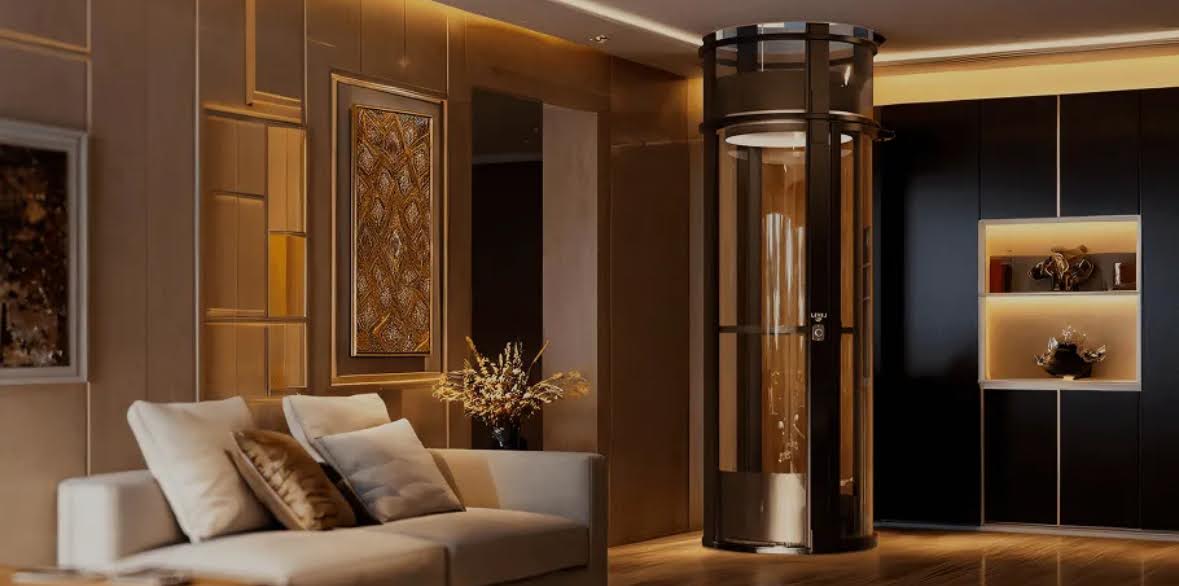
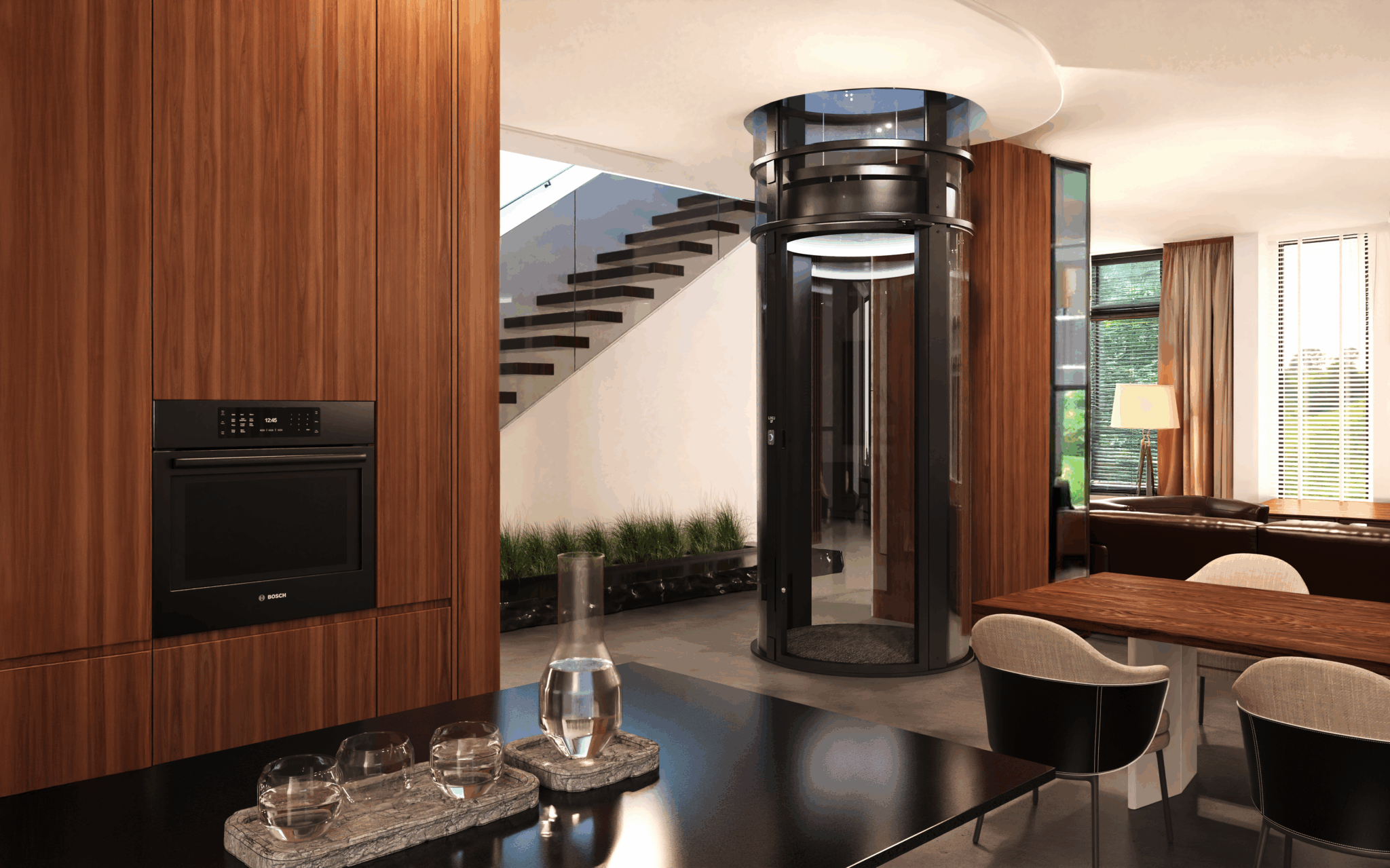
The CY300 home elevator from Level Up is our largest, wheelchair friendly option, designed for people with limited mobility who need extra cabin space and higher lift capacity for everyday use. Designed for home use, these elevators can be installed in as little as 2 – 3 days and have a number of features which are ideal for making a house more accessible for all residents.
Since Level Up focuses exclusively on luxury residential elevators, our goal is to make multi-story homes easier to live in, age in, and most importantly enjoy – while maintaining the look and feel of a high-end interior. Looking for an elevator for indoor or outdoor use? While Level Up residential elevators are capable of traveling up to 4 stops, these home elevators must be located inside the house to ensure optimal performance.
Commercial elevators must comply with the ADA Standards, which include minimum car dimensions and requirements for emergency communication devices. Elevators must meet the ASME A17.1 Safety Code for Elevators and Escalators to comply with ADA Standards.
A wheelchair friendly home elevator can:
- Restore mobility for anyone who struggles with stairs
- Allow users to travel between floors without requiring assistance
- Make it easier to move groceries, luggage, laundry, or medical equipment with a wheelchair elevator.
Also, these elevators support “aging in place,” so you can stay in the home you love. With a number of styles, brands and models to choose from, these elevators provide an essential service that enhances the quality of life for humans, while keeping the home accessible and functional for everyone living in them. Installing a wheelchair friendly home elevator offers safety, independence, and long-term accessibility for users with mobility challenges.
Types of Wheelchair Elevators
Understanding your options makes it easier to choose the right solution for your space, your mobility needs, and your design priorities. There are several types of wheelchair elevators, each with its own features and benefits.
These include:
- Traditional in-shaft elevators
- Shaftless residential elevators
- Vertical platform lifts
- Incline platform lifts and stairlifts
- LULA Elevators
In-Shaft Elevators
Traditional in-shaft elevators are installed inside a constructed hoistway (shaft). They can be added to existing homes but often require significant remodeling that can increase the cost and add to the total price of the project– cutting through floors, reinforcing structures, and planning for a pit or a dedicated machine room.
With a number of brands on the market offering wheelchair accessible options, in-shaft elevators can also be a solution for existing buildings where a traditional home elevator can be retrofitted, though major modifications will be needed. If you’re building a custom home, integrating an in-shaft elevator during construction gives you total control over layout and finishes.
However, you’ll still need to plan for dedicated shaft space, clearances, and structural changes before they’re installed.
Shaftless Residential Elevators (Level Up’s Specialty)
Shaftless elevators, like those offered by Level Up, eliminate the need for a traditional hoistway or deep pit. Instead, our self-supporting home elevators sit directly on your finished floor and travel through a simple cut-out. If you have very high ceilings and an open air space, these home elevators can also be balcony mounted. For homeowners, this means minimal remodeling to the house – no major excavation or large shafts needed which saves on cost. Shaftless elevators are often installed in open areas of the home and can be customized to fit the style of the home. Various door configurations are available depending on the model purchased, so you can gain entry and exit with ease.
These elevators offer:
- Compact footprint that preserves valuable square footage
- Design flexibility with cylindrical or square panoramic cabins to match your interior style
- Fast installation; once pre-construction requirements are met, lift can be installed in days by your local authorized distributor
- Custom built lift able to travel up to 4 stops or 38 feet of total rise
- Annual service available with your authorized distributor to ensure optimal performance
Vertical Platform Lifts
Vertical platform lifts (VPLs) are open or enclosed platforms that travel straight up and down. They have:
- Large enough models that users can stay in their wheelchairs
- Common for porch, deck, or short-rise applications
- Many can lift to 750 lb
- Often used indoors or outdoors where stairs or ramps are impractical. For outdoor use, VPLs are designed with weather-resistant features to ensure reliable functionality outside the home.
While ramps are a common solution for accessible routes, especially for those using scooters, ramps can also require a lot of space and may not be feasible in areas with limited room or steep elevation changes. In these cases, VPLs offer a space-efficient and cost-effective alternative to traditional ramps. Vertical platform lifts travel straight up and down, while inclined platform lifts follow the angle of a staircase.
Incline Platform Lifts & Stairlifts
Incline platform lifts are mounted on a rail along the stairs and carry the wheelchair and user together. Stairlifts, on the other hand, use a fold-down chair that moves along a rail, and the user transfers from their wheelchair to the seat. While the price point may be cheaper, stairlifts are not accessible for wheelchairs or scooters.
These solutions are ideal when the user can safely transfer to a chair (stairlift) or when there’s limited space for an elevator or platform lift. They also preserve more space within the home, making them a practical option for smaller homes.
LULA Elevators
LULA Elevators are hybrids between full elevators and wheelchair lifts and are common in small commercial buildings.
Vertical Platform Lifts: When Are They a Good Fit?
If you’re comparing a Level Up home elevator to other accessibility options, it helps to understand the different to a vertical platform lift. They travel vertically between fixed levels like porches, decks, and mezzanines. Many can handle up to 750 lb, making them suitable for both users and mobility devices.
VPLs come in various sizes and can be configured as enclosed or open. They are limited in the number of feet and levels they can travel. Compared to a long ramp, a vertical platform lift takes up less space and may be easier to use for anyone who visit with limited upper body strength.
Stair Lifts vs. Vertical Platform Lifts vs. Home Elevators
Each solution has its point in the direction of the specific needs and circumstances of the customers. For example,
Stair lift: These are ideal for individuals who can transfer from their wheelchair to a chair lift. Key highlights include:
- More affordable price point and quicker to install compared to other options
- Mounted on a rail along the staircase
- It can be folded away when not in use, preserving space with wheelchair lifts.
Vertical Platform Lifts: These are suitable for users who need to remain in their wheelchairs during the lift. Notable qualities include:
- Can handle heavier loads depending on the platform size
- Ideal for short rises, such as from a garage to the main level
- May not offer the same level of comfort and aesthetics as a fully enclosed residential elevator for the same cost
Residential Elevators (Level Up): These provide the highest level of convenience, comfort, and aesthetics with the following considerations:
- Fully enclosed design
- Smooth starts and stops
- Customizable to match the home’s interior
- Offers a wheelchair lift model (CY300)
- Quick & Seamless installation
- Offer a long-term solution that enhances the home’s functionality and value
Choosing the Right Elevator for Your Needs
The first step is to define what “accessibility” means for you by considering:
- Do you use a wheelchair, walker, or cane?
- How many levels do you need to access?
- How many people will use the lift at one time?
- Is design and visibility, like Level Up’s 360° views, important to you?
- What price point are you working with? What’s the estimated cost of your project?
Answering these questions will help you narrow down your options and choose the right lift that meets your specific needs and preferences.
Assessing Your Space
Every elevator project starts with a clear look at your homes layout. For a Level Up residential elevator, a specialist will:
- Evaluate your home’s layout
- Recommend the best location (through-floor, corner, balcony, etc.)
- Confirm there is adequate headroom and structural support
- Coordinate with your contractor on the floor cut-out and machine room location.
- Verify if our largest, wheelchair lift will fit within your space
Given these are designed for home use, careful consideration must be given to where the elevator and its safety functions are located to ensure accessibility and compliance with safety standards. This includes where the elevator controls and power supply are to be installed. This thorough assessment ensures the installation process is smooth and the elevator will operate efficiently and safely within your home’s unique structure.
Weight Capacity
Safety starts with choosing the right capacity. Make sure the elevator’s rated capacity comfortably exceeds your actual needs by considering:
- The user’s weight
- The weight of any mobility device
- The weight of caregivers
- Any items you move regularly, such as groceries or medical supplies.
Looking ahead, a bit more capacity now can give you more flexibility to respond in the future. This forward thinking ensures your elevator can accommodate changing needs over time and provide long-term value and functionality.
Door Configurations
For wheelchair lifts, door placement can make or break daily use for wheelchair users and prevent the possibility of falls in the future. Thoughtful door configurations can simplify entry and exit, reduce awkward turning in the car, and help align landings with hallways, bedrooms, or living spaces. Ensuring the doors for your wheelchair lift are positioned for unassisted entry and exit is key to maintaining independence and ease of use. Doors must provide a minimum clear opening of 36 inches. Most manual wheelchairs are typically 27 to 32 inches wide and 43 to 48 inches long. As a result, it is important to measure the width and length of your wheelchair to ensure it fits in the elevator. Power door openers and remote controls can enhance the accessibility of wheelchair lifts.
Elevator Design and Planning
Designing a wheelchair lift starts with understanding the user’s needs and the building’s layout. Key considerations are exterior dimension, weight capacity, size of elevator car and the accessibility functions that will make life easier.
Installation and Maintenance
Installing a home elevator is more complex than a basic lift, but Level Up’s process is as smooth as the ride itself. Installed in as little a 2 – 3 days, these self-supporting elevators simply rest on the existing ground floor of your home. Pre-construction and site preparation involve your contractor cutting out the floor and ensuring machine room area and power supply is correctly installed according to Level Up’s specifications.
Wheelchair Lifts
Wheelchair lifts are manufactured in a factory, with standard models often in stock for quicker delivery, while custom options are built to order, which can impact installation time. Level Up’s largest model, the CY300, is a wheelchair lift with a total rated load of 900 lbs. Due to the compact size of the elevator car, it is recommended to test your wheelchair before purchasing as not all wheelchairs will fit inside.
After installation, you will be shown how to operate the wheelchair lift, use emergency communication features, and schedule maintenance. This comprehensive handover ensures you are fully equipped to use and maintain your new elevator safely and efficiently.
Elevator Safety Inspection
Regular elevator safety inspections are crucial to maintaining a safe and accessible environment for wheelchair users. During an inspection, a qualified professional will check the upper landing gate, platform level, power and emergency controls to ensure everything is working correctly. For example, they will check that the upper landing gate closes securely and the elevator car is level with the floor to prevent tripping hazards and smooth access.
These inspections help identify potential issues before they become safety risks, so the elevator or wheelchair lift continues to provide reliable access throughout its life. Regular safety checks are especially important in high-traffic buildings or where the elevator is the primary means of access for residents or visitors with mobility challenges. Contact your local authorized distributor to verify the frequency and estimated costs of maintenance on your mobility device.
Elevator Installation Companies
Choosing the right elevator installation company is crucial for a successful and safe project. Companies that specialize in vertical platform lifts, platform lifts, and wheelchair elevators bring valuable expertise to the design, installation, and maintenance of your system. Look for companies with a good reputation, a track record of compliance with elevator codes and standards, and the ability to offer customized solutions to your accessibility needs.
A reputable company will guide you through every step from selecting the right size and features to a smooth installation process. They will also provide ongoing support and maintenance so you can maintain your independence and peace of mind for years to come.
Elevator Resources and Guides
Elevators can be overwhelming to navigate without the right resources and guides. Organizations like the National Elevator Industry Inc. (NEII) have comprehensive information on elevator safety, accessibility, and best practices. Home modification companies like BraunAbility also have detailed guides on selecting, installing, and maintaining wheelchair elevators, platform lifts, and stair lifts. For these commercial spaces, wheelchair lifts are approved in the ADA Accessibility Guidelines as a means to provide unassisted entry and exit from buildings.
These resources will help you understand the differences between various lift options, stay up to date with the latest codes and standards, and make informed decisions about your home or building’s accessibility. Whether you’re planning a new installation or upgrading an existing system, these guides are essential tools to ensure your elevator meets your needs for safety, accessibility, and independence.
Conclusion
Embracing accessibility not only gives independence and convenience but also adds value to your property and ensures everyone can enjoy a safe and comfortable environment. Investing in a wheelchair elevator is a step towards a more inclusive and functional living space for all.
FAQ
What is a wheelchair elevator called?
A wheelchair elevator is commonly referred to as a wheelchair lift, platform lift, or vertical platform lift. These devices raise a wheelchair and its occupant over vertical barriers like steps.
What types of Wheelchair-friendly elevator are there?
There are several types of wheelchair elevators available, including traditional in-shaft elevators, shaftless residential elevators, vertical platform lifts, incline platform lifts, or stairlifts. Each type enhances accessibility and mobility for individuals using wheelchairs.
How do vertical platform lifts compare to residential elevators?
Vertical platform lifts are better for short travels and require less interior remodeling, but lack the comfort, safety features and aesthetics of residential elevators. In summary, your choice depends on your specific needs and design preferences for your house.
What should I consider when choosing an elevator?
When choosing an elevator, you should consider your mobility needs, the number of floors to be accessed, the expected user capacity, and the design aesthetics. If these factors align with your requirements, you’ll have a more functional and visually appealing choice.